Water heater leaks and what they reach
A water heater does not usually fail gradually. When the tank goes, it releases everything it holds, typically 40 to 50 gallons, in one event.
Signs to look for
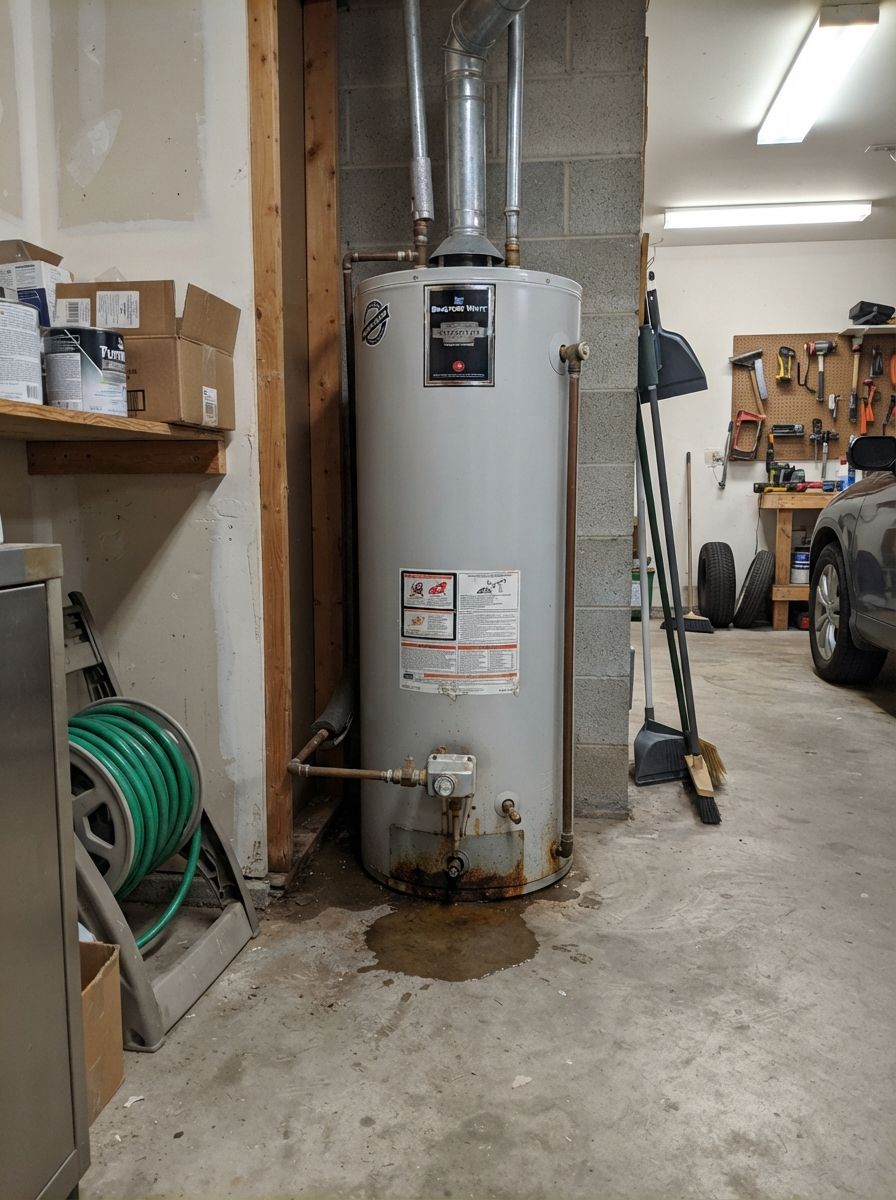
- Water pooling around the base of the tank
- Rust-colored staining on or under the unit
- A relief valve that discharges repeatedly
- Rumbling or popping sounds from the tank
- Water that is suddenly not staying hot
- 1 AC condensate. The pan overflows up in the attic and finds the ceiling below it.
- 2 The ceiling stain. It marks where the water arrived, not where it started out.
- 3 A burst supply line. Pressurized pipe inside a wall, running until the main is shut.
- 4 The water heater. Often in the garage, and its failure runs toward the house, not away from it.
- 5 A slab leak. It travels sideways under the concrete and surfaces long after it began.
Why the garage placement matters in Orange County
Most water heaters here sit in an attached garage, and most attached garages slope toward the house rather than the driveway. When the tank lets go, the water runs toward the interior wall: into the drywall at floor level, under the threshold, and into whatever room shares that wall.
A drain pan helps only if it is plumbed to a drain. Many are not, and a pan holds a couple of gallons out of fifty.
The slow version is worse
A pinhole in the tank or a weeping fitting can run for months behind the unit without ever pooling visibly. That version does not flood anything. It just keeps the drywall and the wall framing damp long enough for mold to establish.
Fixing the source is only half of it
Replacing the unit is a plumbing job and usually a fast one. Drying the wall assembly and the adjoining room is a different job, and skipping it is the most common reason a homeowner ends up dealing with mold a month after the heater was replaced.