Air conditioner water leaks into ceilings
An air handler in an attic produces condensate all day in summer. When the drain line blocks, that water has one way out, down through the ceiling below it.
Signs to look for
- A brown ring or sagging spot on a ceiling, often near a hallway or closet
- Water dripping from a ceiling vent or light fixture
- A standing pool in the emergency drain pan under the air handler
- The system shutting itself off on a hot day (a float switch doing its job)
- Higher humidity indoors even while the system runs
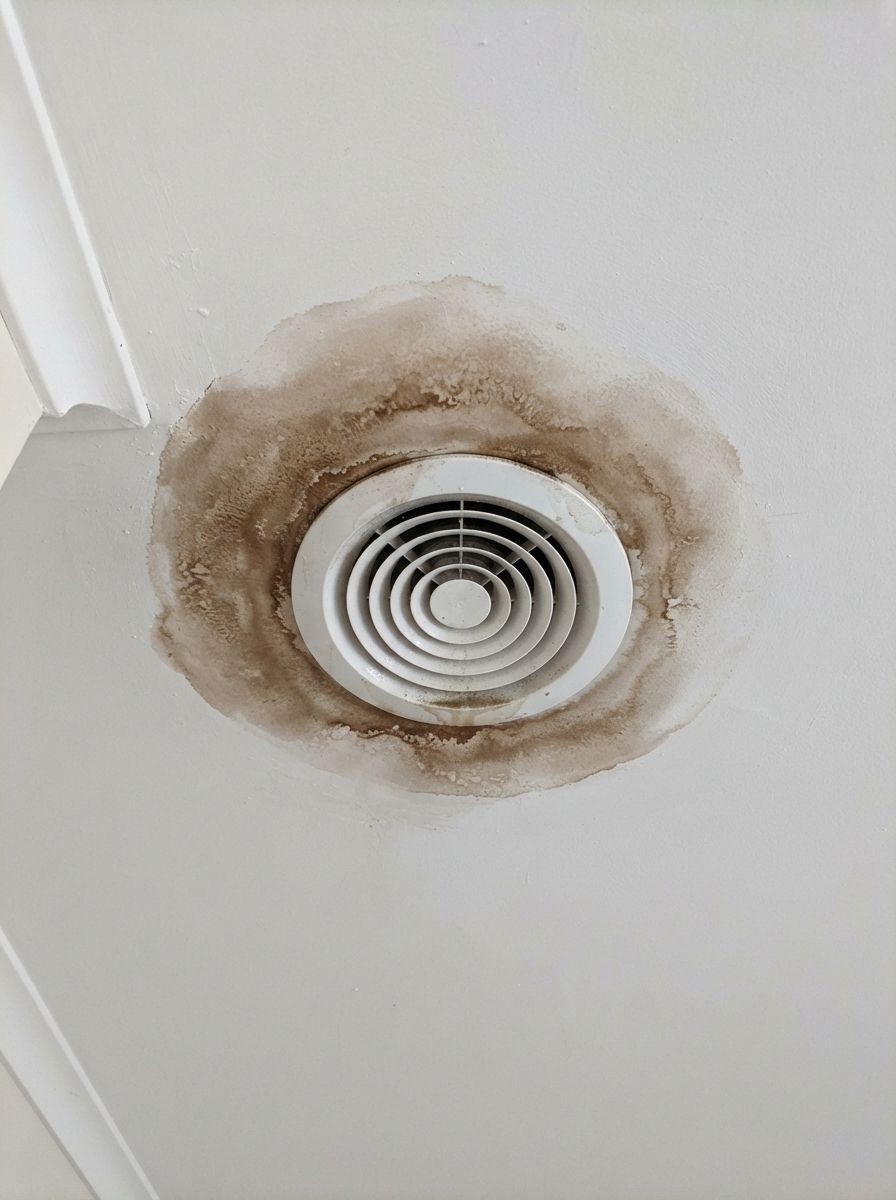
- 1 AC condensate. The pan overflows up in the attic and finds the ceiling below it.
- 2 The ceiling stain. It marks where the water arrived, not where it started out.
- 3 A burst supply line. Pressurized pipe inside a wall, running until the main is shut.
- 4 The water heater. Often in the garage, and its failure runs toward the house, not away from it.
- 5 A slab leak. It travels sideways under the concrete and surfaces long after it began.
Why it happens in August and not in January
Condensate volume tracks how hard the system works. A line that is partly blocked with algae and dust handles a mild day fine and fails on the first stretch of real heat, which is exactly when nobody wants to shut the system down.
Attic leaks are found late
The water lands on insulation and ceiling drywall before it shows on the surface. Insulation holds it, so the stain you eventually see is smaller than the wet area above it, often by a lot.
Fixing the source is only half of it
Clearing the drain line stops the source. The ceiling drywall, the insulation above it and the framing it touched are still wet, and an attic is warm and dark, which is why this particular leak turns into a mold problem faster than most.