Burst pipes: the first ten minutes
Unlike most water damage, a burst supply line does not stop on its own. It releases water at full pressure until somebody closes a valve.
Signs to look for
- Water appearing quickly from a wall, ceiling or under a cabinet
- A sudden drop in water pressure elsewhere in the house
- The sound of running water with no fixture open
- A supply line under a sink that has visibly split or bulged
- 1 AC condensate. The pan overflows up in the attic and finds the ceiling below it.
- 2 The ceiling stain. It marks where the water arrived, not where it started out.
- 3 A burst supply line. Pressurized pipe inside a wall, running until the main is shut.
- 4 The water heater. Often in the garage, and its failure runs toward the house, not away from it.
- 5 A slab leak. It travels sideways under the concrete and surfaces long after it began.
Shut off first, diagnose second
Find the main shutoff before you need it. In Orange County homes it is usually on the street side of the house, near the hose bib or in a box at the property line. Knowing where it is on a normal Tuesday is worth more than any advice given while it is happening.
For a fixture supply line, the angle stop under the sink or behind the toilet is faster than the main.
Why volume matters more than duration
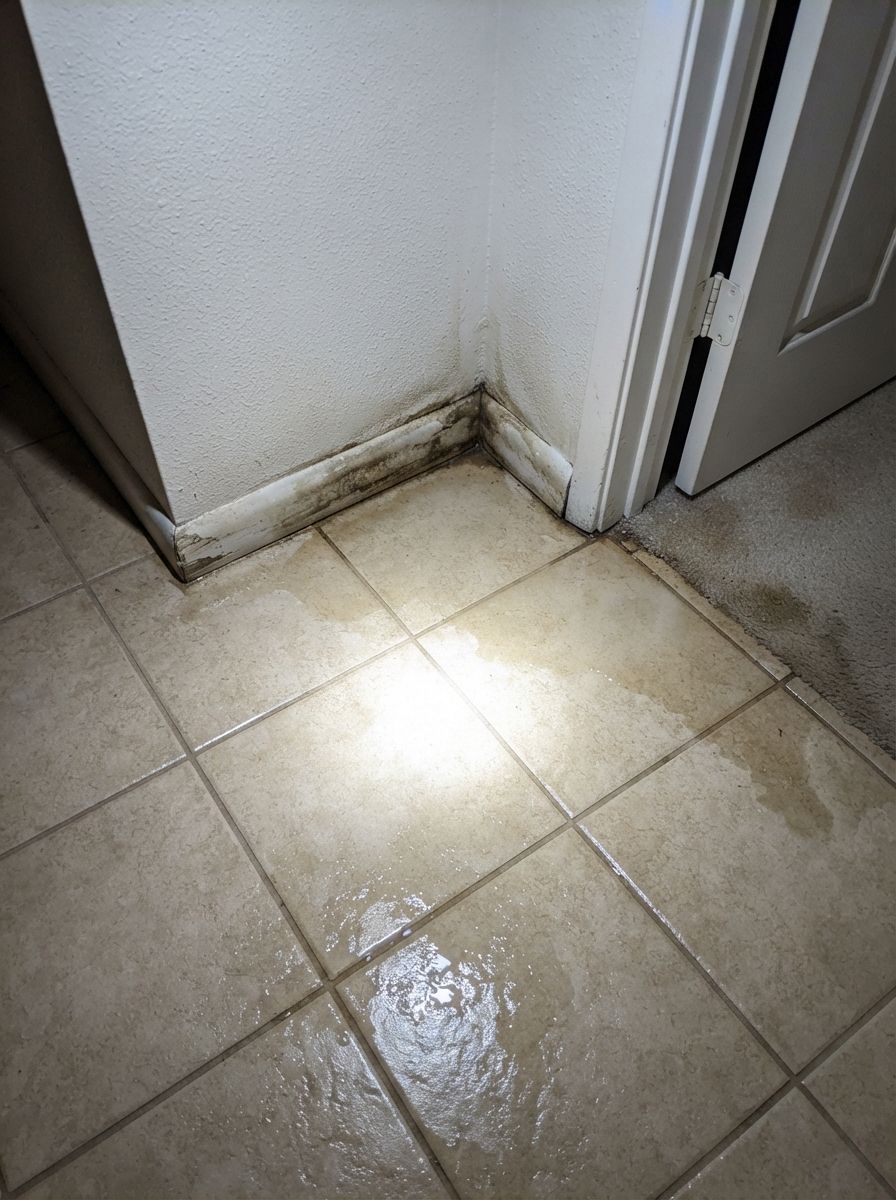
A supply line under pressure moves several gallons a minute. Twenty minutes of that is not a puddle. It is enough to saturate flooring across several rooms and to run down inside wall cavities to the floor below.
Fixing the source is only half of it
The plumbing repair is often small: a coupling, a length of pipe, an hour of work. The water that came out in the meantime is the expensive part, and it needs to be extracted and dried rather than mopped.