Signs of mold in a house
Most mold is found by smell before it is found by sight, because the majority of it grows where nobody is looking.
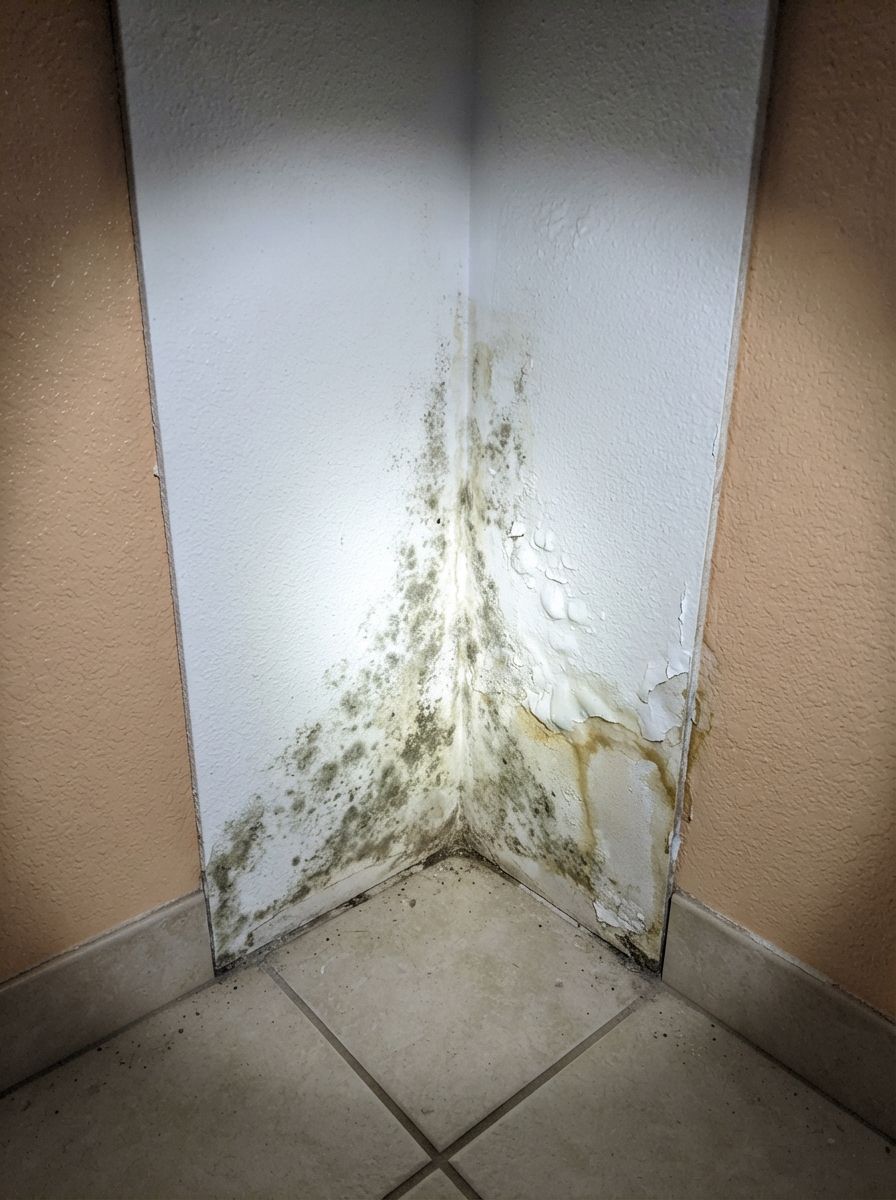
The smell comes first
A musty, earthy smell that is stronger in one room, stronger after rain, or stronger when the air conditioning kicks on is the most reliable early sign. If it returns after cleaning, the source was never reached.
A smell that disappears when you are away for a few days and hits you when you walk back in is worth paying attention to. You stop noticing a constant smell within minutes of being in it.
What to look at
Growth is not always fuzzy or black. It shows up as discoloration in patches, often greenish, gray, white or dark brown, and it tends to follow moisture rather than spread evenly.
Where it hides in a slab home
Behind baseboards where a slab leak wicked upward. Under flooring that was replaced but never dried underneath. Inside the wall shared with a garage water heater. Above a ceiling under an attic air handler. Behind a vanity or under a sink where a supply line seeped slowly for months.
Worth an inspection if
- A musty smell returns after cleaning
- A stain reappears through fresh paint
- Flooring is cupping, lifting or feels soft in one area
- There was a leak in the past that was dried with fans and left at that
- The smell is worse after the house has been closed up for a day
Next step: Mold inspection in Orange County
If there is water in the home right now, that changes the priority: start here instead.